How Distributed Systems Keep Our Apps Running
How Distributed Systems Keep Our Apps Running
When you edit a Google Doc and see changes appear instantly, or tap "like" on Instagram and the counter updates, you're seeing distributed systems at work.
Why Distributed Systems?
A single server has two big problems:
- Scalability: One machine can't handle millions of users.
- Reliability: If it crashes, the entire app goes down.
Distributed systems solve this by spreading the load across multiple servers (nodes):
- If one fails, others take over (availability).
- If traffic grows, more servers can be added (scalability).
But once you spread work across nodes, you must keep them in sync. That's where complexity begins.
The CAP Theorem: You Can't Have It All
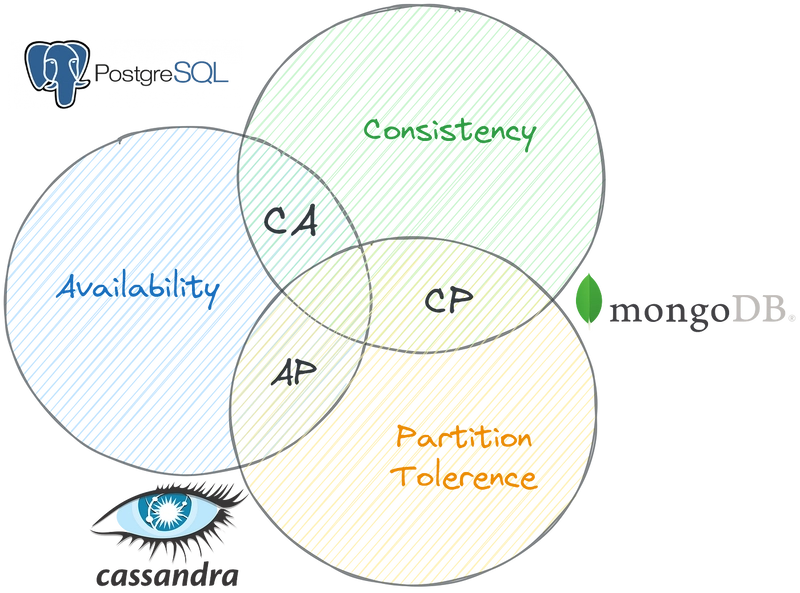
Eric Brewer's CAP theorem explains the limits of distributed systems. It states you can only fully guarantee two of three properties:
- Consistency (C): Every user sees the same data at the same time.
- Availability (A): The system always responds to requests.
- Partition Tolerance (P): The system keeps working even if nodes can't talk to each other.
Why Partition Tolerance Is Non-Negotiable
In the real world, networks fail: cables break, servers restart, data centers lose connectivity.
That means partition tolerance (P) is unavoidable. You can't build a distributed system that assumes perfect networks.
So in practice, the trade-off is always Consistency vs. Availability during a partition.
The Trade-offs in Action
| Letter | Meaning | Real-World Example |
|---|---|---|
| C | Consistency | Everyone sees the same data. Banks rely on this. |
| A | Availability | System responds even if some nodes are disconnected. Instagram likes can lag slightly. |
| P | Partition Tolerance | System keeps running even when network failures split nodes. Cloud storage across continents relies on this. |
Understanding the Trade-offs
In practice, network partitions (P) are inevitable in distributed systems, so the real choice is between:
CP Systems: Choose consistency over availability
- Example: Traditional databases that lock during updates
- Use case: Financial transactions where accuracy is critical
AP Systems: Choose availability over consistency
- Example: Social media feeds that might show slightly outdated content
- Use case: User-facing applications where uptime matters most
Key Takeaways
- Distributed systems solve scalability and availability challenges but introduce complexity
- The CAP theorem forces architectural decisions based on business requirements
- Understanding these trade-offs helps design systems that meet user expectations
- No system is perfect — it's about choosing the right compromises for your use case
Enjoyed this post?
Found this helpful? Share the link with others!